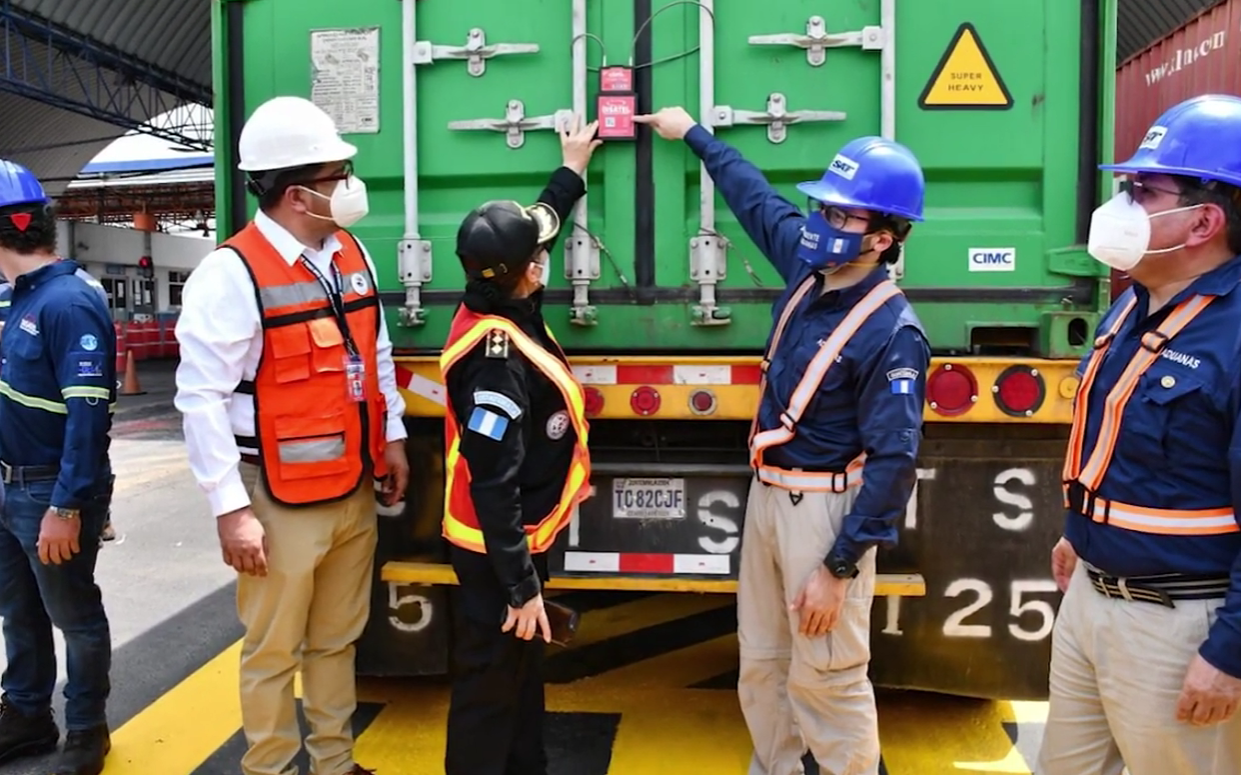
Nationale ECTS-implementatie maakt end-to-end vrachtzichtbaarheid in heel Guatemala mogelijk
Terwijl de internationale handel in Midden-Amerika zich blijft uitbreiden, worden de douaneautoriteiten geconfronteerd met toenemende druk om doorvoervracht veilig te stellen zonder de legitieme handel te vertragen. Guatemala heeft deze uitdaging aangepakt door een landelijk elektronisch vrachtvolgsysteem (ECTS) in te zetten, waardoor een verbonden toezichtmodel ontstaat dat slimme elektronische zegels, GPS-monitoring en douanesysteemintegratie combineert.
Het project is ontwikkeld voor de Superintendency of Tax Administration (SAT) van Guatemala en laat zien hoe digitale technologieën gefragmenteerd, handmatig toezicht kunnen vervangen door continue zichtbaarheid van de vracht, intelligente risicobeheersing en efficiëntere douaneoperaties.
Projectmomentopname
Klant
Superintendentie van de Belastingdienst (SAT)
Land
Guatemala
Industrie
Douaneadministratie • Transittoezicht • Grensbeveiliging • Inkomstenbescherming
Kerntoepassing
- Toezicht op transitlading
- Handhaving van de douane tegen smokkel
- Grensoverschrijdende vrachtbeveiliging
- Bescherming van douane-inkomsten
- Handelsfacilitatie
Geïntegreerde technologieën
- Nationaal elektronisch vrachtvolgsysteem (ECTS)
- Slimme elektronische GPS-zegels
- Realtime monitoringplatform
- DUCA douaneaangifte integratie
- Mechanismen voor douanerisicobeheer

De uitdaging: de douanecontrole over de grens handhaven
Guatemala fungeert als een van de belangrijkste logistieke corridors van Midden-Amerika en verbindt internationale havens met douanefaciliteiten in het binnenland en buurlanden.
Hoewel vracht die het land binnenkomt, kon worden geïnspecteerd in havens of grenscontroleposten, bleef het moeilijk om de zichtbaarheid tijdens het transitotraject te behouden. Zodra de vrachtwagens het eerste douanecontrolepunt verlieten, beschikten de autoriteiten over beperkte informatie over de status van de lading totdat deze op de aangegeven bestemming arriveerde.
Dit gebrek aan continu toezicht verhoogde de blootstelling aan verschillende operationele risico’s:
- Ongeoorloofd lossen tijdens transport
- Lading vervangen of knoeien
- Smokkelactiviteiten
- Inkomstenverlies veroorzaakt door transitfraude
- Grote afhankelijkheid van handmatige inspecties
- Langere opruimtijden en operationele knelpunten
Conventionele mechanische afdichtingen konden alleen aangeven of een container geopend was. Ze verstrekten geen informatie over de locatie van de lading, het transportgedrag of de naleving van goedgekeurde doorvoerroutes.
Voor moderne douaneadministraties die grote vrachtvolumes beheren, voldeed deze aanpak niet langer aan de operationele vereisten.
Bouwen aan een digitaal douanedoorvoernetwerk
Om de vrachtveiligheid te verbeteren zonder de handel te verstoren, heeft Guatemala een landelijk ECTS-platform geïmplementeerd dat vracht, voertuigen, douaneaangiften en toezichthoudende autoriteiten gedurende het gehele transitproces digitaal met elkaar verbindt.
In plaats van uitsluitend te vertrouwen op fysieke inspecties, kunnen douanebeambten nu zendingen continu monitoren via een gecentraliseerd digitaal platform.
Slimme elektronische zegels worden de digitale identiteit van vracht
Elke bewaakte container of trailer wordt beveiligd met behulp van elektronische zegels met GPS-functie die de ladingstatus tijdens het transport kunnen rapporteren.
Elke afdichting ondersteunt:
- Continue GPS-positionering
- Elektronische sabotagedetectie
- Waarschuwingen voor het openen van de deur
- Beheer van RFID-autorisatie
- Volledige transportgeschiedenis
In plaats van alleen als fysiek vergrendelingsapparaat te functioneren, rapporteert het elektronische zegel voortdurend de operationele status van elke zending, waardoor de douaneautoriteiten de integriteit van de lading in realtime kunnen verifiëren.
Realtime monitoring ondersteunt onmiddellijke risicoreactie
Alle transportgegevens worden verzonden naar het nationale ECTS-monitoringplatform, waar douanepersoneel live operationeel inzicht krijgt in het transitnetwerk.
De belangrijkste toezichtcapaciteiten zijn onder meer:
Digitale routecontrole
Goedgekeurde transportcorridors zijn vooraf gedefinieerd binnen het systeem.
Als een voertuig de toegestane route verlaat, buiten de toegestane limieten blijft stilstaan of abnormale bewegingspatronen vertoont, genereert het platform automatisch waarschuwingen voor de douanebeambten.
Gecontroleerde digitale release
Elektronische zegels kunnen alleen worden ontgrendeld na autorisatie bij aangewezen douanecontrolepunten, douane-entrepots of goedgekeurde bestemmingen.
Dit digitale autorisatiemechanisme zorgt voor een vertrouwde keten van controle tijdens het hele transport, terwijl de mogelijkheden voor ongeautoriseerde toegang tot vracht worden verminderd.
Ladingbeweging koppelen aan douaneaangiften
Een bepalend kenmerk van de inzet van Guatemala is de integratie tussen het ECTS-platform en het DUCA-douaneaangiftesysteem.
Door operationele gegevens te koppelen aan douanedocumentatie krijgen autoriteiten een uniform digitaal beeld van elke zending, inclusief:
- Informatie over aangifte
- Identiteit van de lading
- Goedgekeurde transportroute
- Elektronische zegelstatus
- Historische transportgegevens
In plaats van meerdere onafhankelijke systemen te vergelijken, kunnen douanebeambten zowel de fysieke vrachtbewegingen als de aangiftegegevens binnen één operationele omgeving bekijken, waardoor snellere verificatie en beter geïnformeerde handhavingsbeslissingen mogelijk zijn.
Van handmatige inspectie tot datagedreven douanetoezicht
De implementatie van ECTS vertegenwoordigt meer dan een technologische upgrade; het weerspiegelt een verschuiving in het douanemodel.
Voorheen was het toezicht grotendeels afhankelijk van papierwerk, escortprocedures en willekeurige inspecties.
Tegenwoordig werken douanebeambten met realtime transportinformatie, ondersteund door geautomatiseerde waarschuwingen, digitaal bewijsmateriaal en op risico gebaseerde inspectiestrategieën.
Routinematige vracht kan efficiënter worden vervoerd, terwijl de handhavingsmiddelen zich richten op zendingen die abnormaal gedrag vertonen.
Operationele voordelen
Verbeterde bescherming van de douane-inkomsten
Doorlopende vrachtmonitoring helpt bij het voorkomen van illegaal lossen, vrachtvervanging en andere overtredingen van het douanevervoer die kunnen leiden tot verlies aan douane-inkomsten.
Grotere handelsefficiëntie
Omdat conforme zendingen digitaal kunnen worden gemonitord, kunnen de douaneautoriteiten onnodige fysieke inspecties verminderen, wat bijdraagt aan een soepeler vrachtverkeer over de nationale transitcorridors.
End-to-end zichtbaarheid van transport
Vanaf het vertrek uit de haven tot de douanefaciliteiten in het binnenland blijft elke zending zichtbaar gedurende het gehele transittraject, waardoor de operationele transparantie aanzienlijk wordt verbeterd.
Sterkere anti-smokkelmogelijkheden
Elektronische zegelgebeurtenissen, GPS-geschiedenis en transportgegevens vormen betrouwbaar digitaal bewijsmateriaal dat douaneonderzoeken ondersteunt en de handhaving van de anti-smokkelpraktijk versterkt.
Een referentiemodel voor de modernisering van de douane in Latijns-Amerika
De ECTS-implementatie in Guatemala illustreert hoe de modernisering van de douane verder gaat dan het installeren van GPS-apparatuur of elektronische zegels.
Het project brengt een geïntegreerd ecosysteem voor digitaal toezicht tot stand waarin vertrouwde detectietechnologieën, douaneaangiften en operationele inlichtingen samenwerken om de naleving te verbeteren en tegelijkertijd legitieme handel te faciliteren.
De succesvolle integratie ervan met het regionale aangiftekader van DUCA levert ook waardevolle ervaring op voor toekomstige digitale douane-initiatieven in Midden-Amerika.
Het perspectief van Jointech
Over de hele wereld evolueren douaneadministraties naar intelligente toezichtmodellen die vertrouwen op continue gegevens in plaats van op geïsoleerde controlepunten.
Gebaseerd op uitgebreide projectervaring in Afrika, Europa, het Midden-Oosten en Azië, gelooft Jointech dat de toekomstige modernisering van de douane zich zal blijven ontwikkelen rond drie strategische pijlers:
Vertrouwde digitale detectie
Slimme elektronische zegels zetten fysieke lading om in continu verifieerbare digitale informatie.
Naadloze systeemintegratie
Moderne ECTS-platforms moeten worden geïntegreerd met douaneaangiften, nationale éénloketsystemen, risicobeheersystemen en andere regelgevingsplatforms om uniforme operationele workflows tot stand te brengen.
AI-gestuurde douane-inlichtingen
De volgende fase van de digitalisering van de douane zal kunstmatige intelligentie combineren met realtime transportgegevens ter ondersteuning van voorspellende risicobeoordeling, detectie van afwijkingen en intelligente besluitvorming.
Veelgestelde vragen
Wat is een elektronisch vrachtvolgsysteem?
Een Electronic Cargo Tracking System (ECTS) is een oplossing voor douanetoezicht die elektronische zegels met GPS, communicatienetwerken en gecentraliseerde monitoringsoftware combineert om continu inzicht te bieden in de doorvoervracht.
Hoe vermindert ECTS het smokkelrisico?
Het systeem bewaakt voortdurend de vrachtbewegingen en detecteert gebeurtenissen zoals het ongeautoriseerd openen van deuren, routeafwijkingen, abnormale stops en transportafwijkingen, waardoor de douaneautoriteiten kunnen reageren voordat overtredingen escaleren.
Waarom ECTS integreren met douaneaangiften?
Systeemintegratie koppelt vrachtbewegingen aan officiële aangiftegegevens, waardoor de vrachtverificatie, risicoanalyse en handhavingsefficiëntie worden verbeterd en de handmatige verwerking wordt verminderd.
Wat onderscheidt de ECTS-implementatie in Guatemala?
De integratie ervan met het DUCA-douaneaangifteraamwerk creëert een uniform toezichtmodel dat aangifte-informatie verbindt met realtime transportgegevens, waardoor douanebeambten een uitgebreid operationeel inzicht krijgen.


 Uw bericht moet tussen de 20-3.000 tekens bevatten!